
IBC News
The IBC: Moving from Isolated Support Measures to Systemic Improvement of the Business Environment
At a meeting of the Business Development Council under the Speaker of the Jogorku Kenesh, IBC head Askar Sydykov presented business's vision for moving from one-off support measures to systemic reform of the business climate, proposing that international rankings guide government policy and that regulations adopted over the past five years be reviewed.


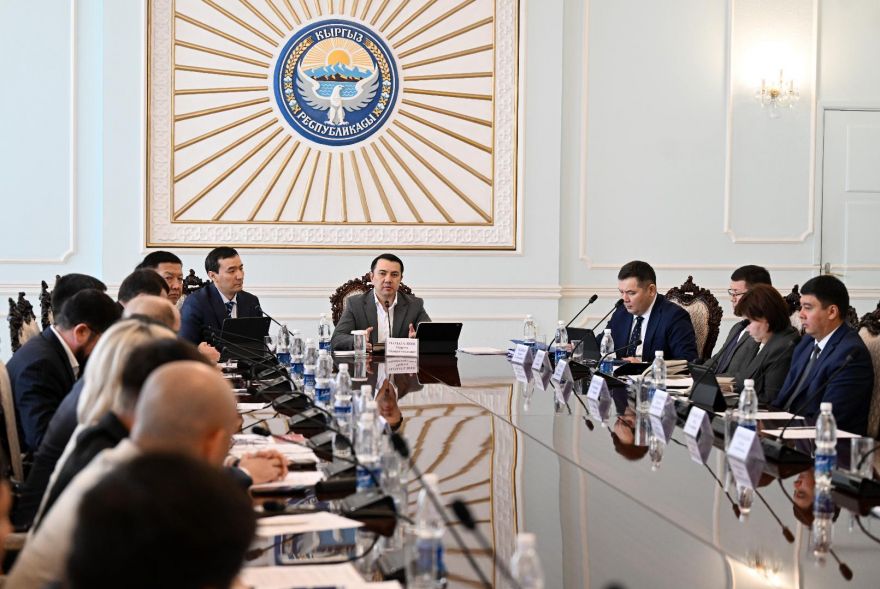
Kyrgyzstan has seen renewed activity at a key platform for dialogue between business and the Jogorku Kenesh of the Kyrgyz Republic. On April 3, a meeting was held of the Business and Entrepreneurship Development Council under the Speaker of the Jogorku Kenesh (the "Business Kenesh"). The business community holds high hopes for continued engagement through the Council. The meeting was chaired by Marlen Mamataliev, Speaker of the Jogorku Kenesh of the Kyrgyz Republic, and Meder Aliev, First Deputy Speaker of the Jogorku Kenesh, with participation from Altynbek Kudaiberdiev, Chairman of the Jogorku Kenesh Committee on Finance, Budget, Entrepreneurship, and Competition Development, deputies of the Jogorku Kenesh, and leadership from relevant government bodies and the business community. Askar Sydykov, Executive Director of the International Business Council, delivered a report titled "Improving the Business Environment and Investment Climate in the Kyrgyz Republic: Current Situation and Future Opportunities." Kyrgyzstan's economy is currently showing steady growth on one hand, while on the other, systemic challenges related to the quality of the business environment and investment climate are intensifying. "The main signal that foreign and domestic investors are receiving today is not so much about tax rates or specific incentives, but about the quality of institutions, the predictability of the rules of the game, and their consistent enforcement," said IBC head Askar Sydykov. In recent years, Kyrgyzstan's standing on a number of key international indicators — particularly those related to the rule of law, perceptions of corruption, and trust in institutions — has often shown a downward trend. This directly affects the cost of capital for the country, investors' willingness to commit to long-term projects, and the behavior of domestic businesses themselves. As a result, businesses are beginning to operate on shorter time horizons, reduce investment activity, and shift toward defensive strategies. At the same time, Kyrgyzstan has a strong window of opportunity. The country remains a relatively open economy with a flexible business sector, a favorable geographic location, and the potential to become a regional hub for investment and trade. "But to realize this potential, we need to move from isolated support measures to systemic improvement of the business environment. And here the key role belongs to the Jogorku Kenesh of the Kyrgyz Republic — as the legislative body that also oversees law enforcement," said the IBC head, proposing two priority areas that, in business's view, could deliver a fast, systemic effect. The first is treating international rankings as a management tool. This is not about chasing rankings, but about using them as an objective framework that reflects real problems. International indices — such as those measuring rule of law, perceptions of corruption, and regulatory quality — effectively show exactly where the system is failing. It is proposed to identify priority rankings and indicators and establish them as benchmarks for government policy. Improving these indicators is not an abstract goal — it means lower transaction costs for business, greater trust, and increased investment. The second area is revising inconsistent regulatory legal acts. Today, the business environment is heavily burdened by regulation that has developed fragmentarily and, in many cases, at odds with market economy principles over recent years. As a result, conditions for full or partial state monopoly have been created in 9 areas of economic activity. Business proposes conducting a comprehensive review of regulatory legal acts adopted over the past five years to assess their compliance with market economy principles, prevent excessive state intervention, and uphold competition principles. The goal of this work is to build a clear, logical, and predictable regulatory environment. This is especially important given that global competition for investment is intensifying. Parliament plays a key role in shaping the business environment, and there is now an opportunity to strengthen that role — through a more systematic approach to assessing draft legislation, factoring in its impact on business activity, and establishing regular dialogue with the business community. The Business Kenesh can become a platform that connects legislative initiative with business practice, allowing systemic barriers to be identified and removed quickly. Business also proposes creating a parliamentary commission to assess the damage entrepreneurs have suffered in recent years as a result of unwarranted actions by government bodies and to put forward relevant proposals for compensation. "The task today is not simply to support business, but to build an institutional environment in which it is advantageous for business to grow, invest, and operate over the long term," Askar Sydykov concluded. The IBC has developed draft proposals for improving the business environment and investment climate in Kyrgyzstan. In particular, to systematize interaction between the Jogorku Kenesh and the business community and improve the effectiveness of parliamentary oversight, it was proposed that the Jogorku Kenesh Committee on Finance, Budget, Entrepreneurship, and Competition Development introduce a monthly "Entrepreneurship Hour" to review current issues concerning the business environment and investment climate and hear proposals and initiatives from the business community, with the mandatory participation of heads and authorized representatives of relevant government bodies. The Business Kenesh meeting also addressed ways to strengthen public-private dialogue and regulatory policy, the application of the Law of the Kyrgyz Republic "On Production and Consumption Waste," draft amendments to the Law "On Competition," protecting competitive conditions in the placement of EV charging stations, and other issues. Following the meeting, the business community's key proposals were included in the Council's protocol, to be implemented in accordance with established procedure. Representatives of the Ministry of Economy and Trade, the Ministry of Natural Resources, Ecology, and Technical Supervision, the Ministry of Justice, the Ministry of Energy, the Ministry of Construction, Architecture, and Housing and Communal Services, and the Antimonopoly Regulation Service under the Ministry of Economy took part in the discussions.
News
IBC Highlights Key Business Concerns Regarding Proposed Tax Code Amendments
On October 12, 2026, Askar Sydykov, Executive Director of the International Business Coun…
IBC Participates in the Meeting of the Statistics Council of the Kyrgyz Republic
On October 6, IBC Executive Director and Deputy Chair of the Statistics Council Askar Syd…
IBC Presented Its Approaches to Advancing Business Interests at the CIPE Regional Conference
IBC presented Kyrgyzstan’s experience in business advocacy at the CIPE regional conferenc…
From Dialogue to Projects: Central Asia–Central Europe Cooperation Discussed in Prague
On September 19, IBC Executive Director Askar Sydykov participated in the international c…