
IBC Highlights Key Business Concerns Regarding Proposed Tax Code Amendments
On October 12, 2026, Askar Sydykov, Executive Director of the International Business Council (IBC), addressed parliamentary hearings at the Jogorku Kenesh of the Kyrgyz Republic on draft legislation proposing 113 amendments to the Tax Code. IBC presented the business community's position on five key issues: tax authorities' access to taxpayer data, the definition of “non-existent supplies,” safeguards for taxpayers' rights, VAT on advance payments, and VAT credit eligibility when offsetting mutual monetary obligations. Particular emphasis was placed on reducing administrative burdens, protecting compliant taxpayers, and ensuring further consultations with the business community on certain provisions of the draft law before its second reading.


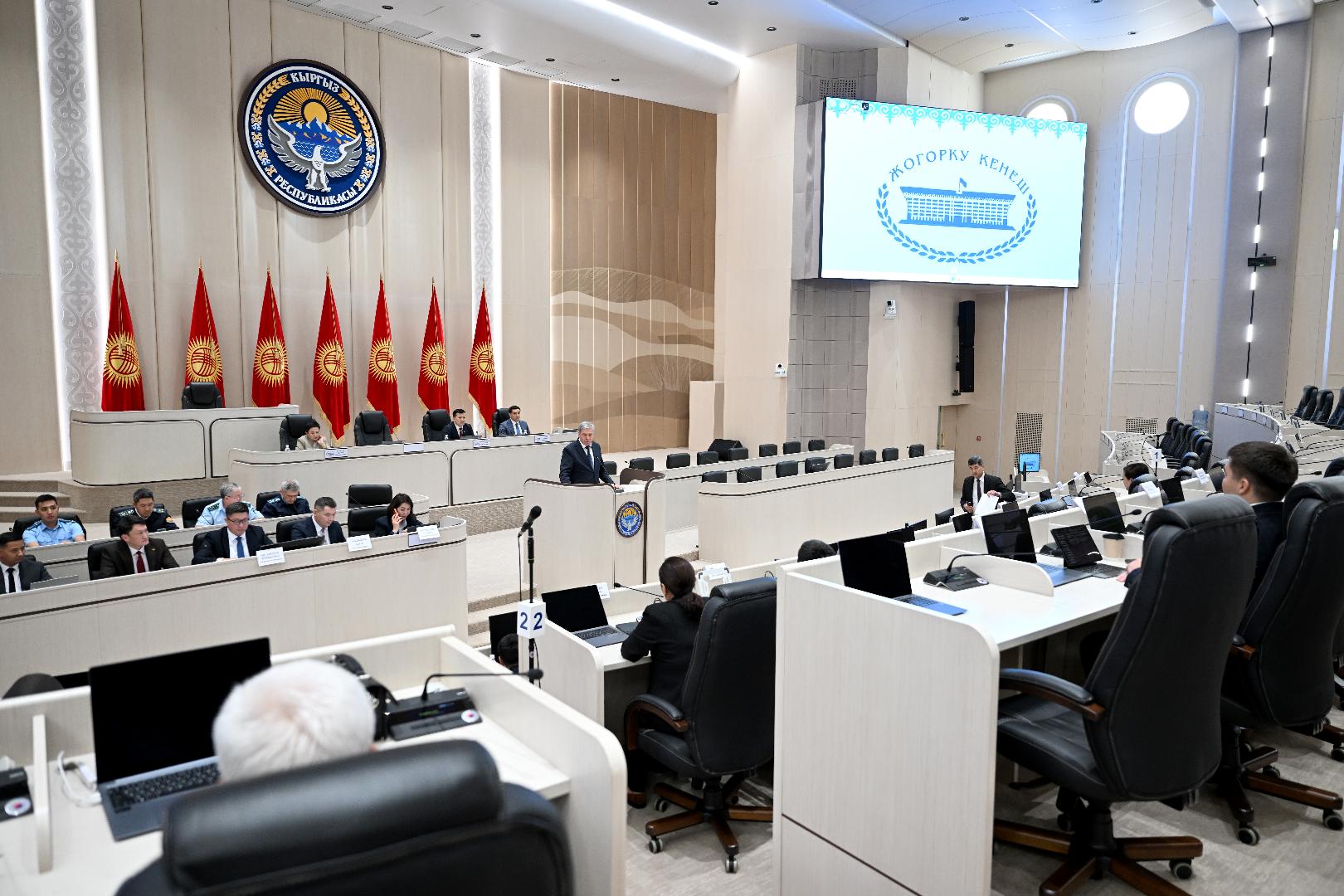
“The draft law moves in two directions: it introduces a number of concessions while also strengthening oversight. For businesses, it is important that the final balance works in favor of conscientious entrepreneurs,” said Askar Sydykov.
Tax rates in Kyrgyzstan remain lower than in neighboring countries, preserving the country's competitive advantages. However, for entrepreneurs, what matters is not only the tax rate itself but also the cost of complying with tax obligations (compliance cost), including accounting services, electronic invoices, cash register equipment, accounting systems, penalties, fines, and interactions with tax authorities. According to the World Bank, in 2023, small enterprises spent an average of 3.7% of their turnover on complying with tax requirements. Increased oversight, frequent regulatory changes, and rapid digitalization are driving these costs higher.
IBC also drew attention to the fact that the version of the draft law submitted to the Jogorku Kenesh of the Kyrgyz Republic contains provisions that had not previously been presented to members of the Interagency Working Group (IWG) or discussed with business representatives. In this regard, the business community proposes holding additional consultations with relevant stakeholders on these provisions before the draft law is considered in its second reading.
IBC identified five issues of particular importance to the business community.
First — Access to Data (Articles 51, 59 and 146). The draft law expands the powers of tax authorities to access taxpayers' fiscal software and obtain information contained in it. It also provides for banks, electronic money operators, and payment system operators to disclose information on account balances and transactions involving taxpayers' bank accounts and electronic wallets in real time following the issuance of a tax payment demand. The business community believes that the scope, procedures, and time limits of such access must be clearly defined, along with safeguards for commercial and banking confidentiality and liability for the unlawful use of information obtained.
Second — “Non-Existent Supplies” and Documentary Evidence of Expenses (Articles 4, 125, 236 and 316). The draft law classifies both transactions that have not actually taken place and transactions that lack documentary evidence as non-existent supplies. This may result in the denial of VAT credits and expense deductions. Furthermore, the invalidation of an invoice that is legally required to be issued is established as an independent ground for denying expense deductions. Where the use of such an invoice for a transaction involving no actual supply has resulted in an understatement of tax liabilities, submitting amended tax returns after receiving a notice following a desk audit does not exempt the taxpayer from penalties. IBC considers it necessary to distinguish deficiencies in documentation from the absence of an actual business transaction and to exclude works and services from the definition of “non-existent supplies.”
Third — Safeguards for Taxpayers' Rights (Article 123). The draft law proposes removing the provision allowing a tax authority's decision to be overturned if the requirements established by this article for issuing a decision following a field tax audit have not been complied with. At the same time, liability of the responsible official would remain in place. The business community believes that this ground for overturning a decision must be preserved, as holding an official accountable does not, in itself, ensure the restoration of a taxpayer's violated rights.
Fourth — VAT on Advance Payments (Article 261). Under the current procedure, a VAT liability arises upon receipt of an advance payment, before the actual supply of goods or services. As a result, part of the advance payment must be used to pay tax before the contract has been fulfilled, reducing the funds available for purchasing materials, production, and carrying out works. This is particularly burdensome for construction and manufacturing companies, as well as contractors operating under long-term contracts. IBC proposes that the mere receipt of an advance payment should not trigger a VAT liability before the actual supply takes place. This proposal has not yet been reflected in the draft law.
Fifth — VAT Credits When Offsetting Mutual Monetary Obligations (Articles 315 and 316). The provisions of the Tax Code establish restrictions on claiming VAT credits in relation to non-cash payments and barter transactions. However, in practice, the offsetting of mutual monetary obligations is not explicitly regulated and is incorrectly treated as barter, which also leads to the denial of VAT credits. To address this issue, IBC proposes explicitly providing in the Tax Code for the possibility of claiming VAT credits when mutual monetary obligations are offset. The relevant amendments have not been included in the current version of the draft law.
According to IBC, the priorities of the tax authorities should be providing guidance to entrepreneurs, explaining legislative requirements, and facilitating voluntary compliance with tax obligations. The proposed expansion of oversight powers must be accompanied by simplified procedures and effective safeguards for taxpayers' rights. Such an approach would help prevent violations, reduce administrative burdens, and strengthen trust between the business community and the government.



News
IBC Participates in the Meeting of the Statistics Council of the Kyrgyz Republic
On October 6, IBC Executive Director and Deputy Chair of the Statistics Council Askar Syd…
IBC Presented Its Approaches to Advancing Business Interests at the CIPE Regional Conference
IBC presented Kyrgyzstan’s experience in business advocacy at the CIPE regional conferenc…
From Dialogue to Projects: Central Asia–Central Europe Cooperation Discussed in Prague
On September 19, IBC Executive Director Askar Sydykov participated in the international c…
IBC Members Receive Ministry of Economy and Commerce Awards on Kyrgyzstan’s Entrepreneurs’ Day
On 18 September 2026, the Ministry of Economy and Commerce of the Kyrgyz Republic held an…