
IBC News
IBC Holds Roundtable on Tax Policy and Administration
More than 100 representatives from government bodies, business, and tax experts gathered at the IBC's roundtable to discuss practical issues in applying the Tax Code and to find a balance between the government's fiscal interests and predictable conditions for business.


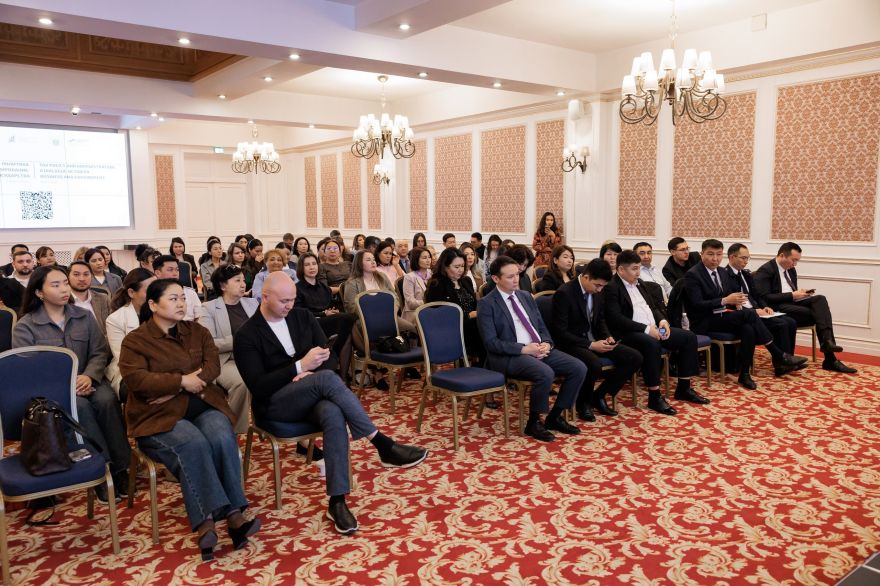
IBC, April 2, 2026. The International Business Council (IBC) held a roundtable titled "Tax Policy and Tax Administration: Dialogue Between Government and Business" on April 2 in Bishkek. The event brought together more than 100 representatives of government agencies, the business community, international and domestic companies, and tax and legal experts. Opening remarks were delivered by IBC Executive Director Askar Sydykov and Iskender Asylkulov, Deputy Minister of Economy and Commerce of the Kyrgyz Republic. The roundtable was prompted by the large number of questions businesses have raised regarding the practical application of the Tax Code of the Kyrgyz Republic, as well as ongoing discussions about changes to tax legislation and approaches to tax administration. The IBC regularly receives requests from companies across various sectors asking for support in discussing specific aspects of tax policy and its practical application. Against this backdrop, holding an open professional dialogue between business and government agencies is both timely and in demand. During the roundtable, representatives of the Ministry of Economy and Commerce and the State Tax Service under the Cabinet of Ministers answered pressing business questions on tax policy and administration. Key issues discussed included tax audits and tax administration, the calculation of penalties and procedures for settling tax debts, the practical application of Article 139 of the Tax Code (market price), taxation of digital services and transactions with foreign suppliers, business proposals for improving tax regulation in specific economic sectors, and excise tax policy. The IBC had previously drawn attention to the growing fiscal burden on business in its analytical report "Some Results of 2025 for Kyrgyzstan's Business," which noted that additionally assessed taxes reached 29.3 billion soms in 2024 (nearly double the 2020 figure) and had already exceeded 21 billion soms in the first 8 months of 2025, while accrued penalties totaled 25.3 billion soms in 2024 (more than a tenfold increase since 2020) and 33.84 billion soms in the first 8 months of 2025 (more than a thirteenfold increase since 2020). Against this backdrop, ensuring predictability in tax policy and enforcement practice, along with building a balanced approach to tax administration, has become especially important. A separate part of the event featured a presentation on international experience in tax policy and administration, including practices from Central Asian countries and international approaches to tax regulation. The roundtable served as a platform for constructive dialogue between government and business aimed at increasing transparency in tax administration, reducing regulatory risks, and developing balanced solutions. Following the event, key areas for further work were identified, including improving specific provisions of tax legislation and strengthening cooperation between government agencies and the business community. The IBC views this event as an important step in developing open and constructive dialogue between government and business that contributes to building a predictable and stable tax environment in the Kyrgyz Republic.
News
IBC Highlights Key Business Concerns Regarding Proposed Tax Code Amendments
On October 12, 2026, Askar Sydykov, Executive Director of the International Business Coun…
IBC Participates in the Meeting of the Statistics Council of the Kyrgyz Republic
On October 6, IBC Executive Director and Deputy Chair of the Statistics Council Askar Syd…
IBC Presented Its Approaches to Advancing Business Interests at the CIPE Regional Conference
IBC presented Kyrgyzstan’s experience in business advocacy at the CIPE regional conferenc…
From Dialogue to Projects: Central Asia–Central Europe Cooperation Discussed in Prague
On September 19, IBC Executive Director Askar Sydykov participated in the international c…